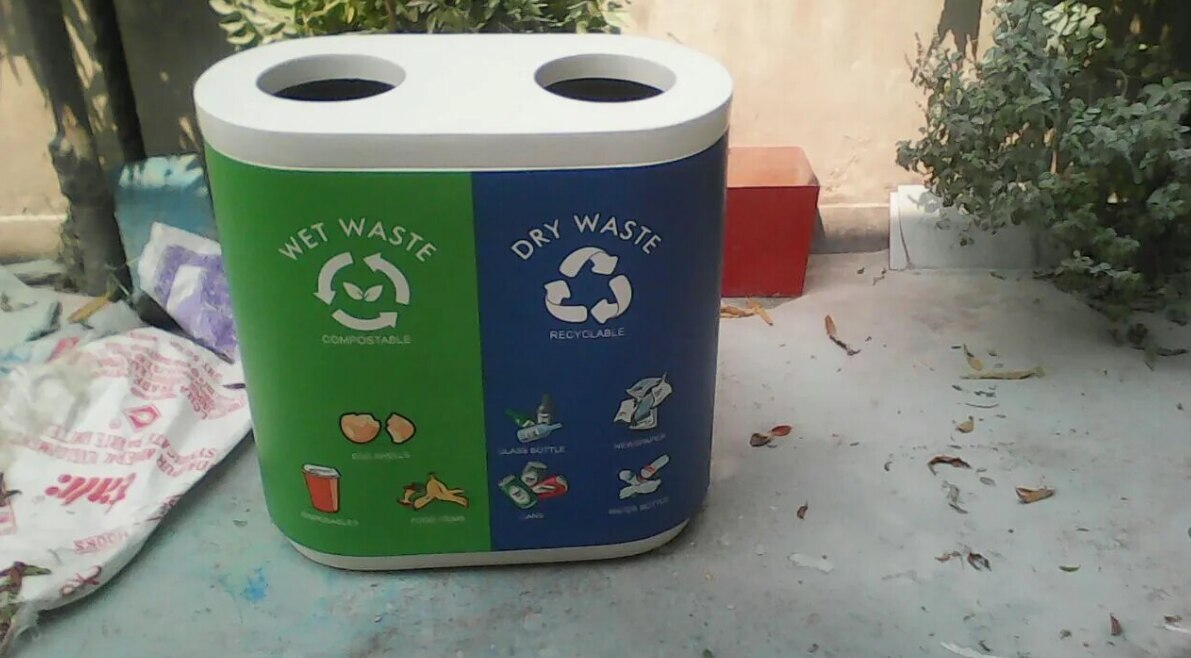
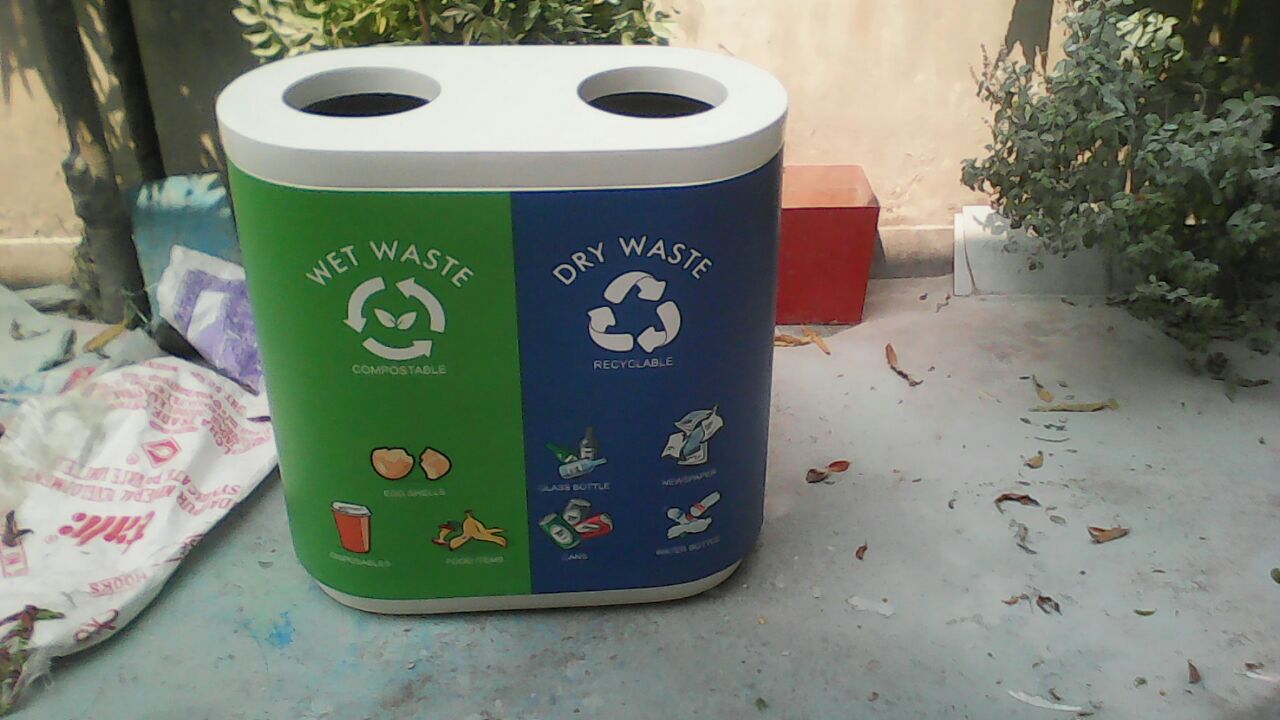
An unlabelled bin at an RO outlet teaches customers nothing and can mix bottles, caps, filter residue and chemical-contaminated waste in one stream. By placing containers at the right process and customer points, matching labels to the collection system and specifying each bin for its actual exposure, you can turn waste disposal into a clear operating instruction.
Key takeaways
- Place customer bins along the visitor collection route.
- Label customer waste and RO process waste with separate signs.
- Match bin capacity and opening to waste volume and handling.
- Require supplier evidence that the bin suits your waste system.
Place the Right Bin at Each RO Activity Point
Place bins according to movement, not convenience: customer waste belongs along the collection journey, while RO process waste stays inside the treatment workflow. An frp dustbin for ro providers in bangalore should never become an unlabelled all-waste container.
| Location | Waste stream | Control |
|---|---|---|
| Dispensing counter or bottle collection point | Empty plastic bottles and caps | Customer-facing bin with bottle-and-cap pictogram |
| Payment and waiting area | Small packaging, wrappers and film | Non-biodegradable label; empty frequently |
| Office area, away from raw-water and chemical storage | Paper, food scraps and routine office waste | Covered bin matched to biodegradable or non-biodegradable collection |
| Raw-water and treatment area | Used cartridge filters, sediment, spent activated carbon and rejected membrane elements | Separate, labelled containers marked STAFF ONLY inside the maintenance area |
Keep process-waste containers behind a controlled access point. Customers should not handle filters, carbon or membranes because residues may remain on them. Separate these materials rather than placing them in one large FRP waste bin.
RO reject water is liquid, so route it to a floor drain, reject-water tank, equalisation tank or authorised discharge arrangement based on flow, TDS and site permissions. It does not belong in an FRP dustbin.
Match colours and labels to the authorised collector’s system and the Solid Waste Management Rules, 2016: biodegradable, non-biodegradable and domestic-hazardous. Write the waste type, collection frequency, responsible operator and contact number on every bin. The layout must be documented so cleaners know what happens after collection.
Use Simple Signs to Separate Customer Waste from Process Waste
Put the customer instruction at eye level on the bin, not on a distant wall. A large bottle-and-cap pictogram should sit above: “EMPTY PLASTIC BOTTLES AND CAPS ONLY. REMOVE LIQUID. DO NOT ADD FILTERS, CHEMICAL PACKETS OR FOOD.”
1. Add a second pictogram showing a hand placing a cap beside a bottle when caps enter the same stream. If the authorised collector requires separate caps, fit a narrow slot labelled “CAPS ONLY” instead.
2. Use one colour for the customer plastic stream only when that colour matches the outlet’s authorised collection arrangement. Colour chosen from a supplier catalogue can confuse users if the collector uses a different system.
3. Mark every maintenance container “STAFF ONLY” and name its contents: “USED CARTRIDGE FILTERS,” “SPENT ACTIVATED CARBON,” “REJECTED MEMBRANES” or “CHEMICAL-CONTAMINATED ABSORBENTS.” Use both words and pictures; a customer may recognise a bottle but not a used membrane retaining treatment residue.
4. Keep ordinary office paper, food scraps and packaging film out of process bins. Never use “ALL WASTE,” because it hides the handling difference between customer plastic and plant waste.
5. Print the responsible operator, collection frequency and emergency contact on each sign. This turns FRP waste bins in Bangalore into a visible segregation system rather than an unlabelled container, while keeping customers away from materials that may carry chemical or biological residue.
Choose the Bin Material, Capacity and Opening for the Site
A compact RO outlet should choose the bin by waste shape, exposure and handling space, not by the label “120-litre” or “240-litre” alone.
| Material | Strength | Limitation |
|---|---|---|
| FRP | Resists rust and weighs less than mild steel | Laminate can crack from impact, point loading or dragging |
| Polyethylene or polypropylene | Tolerates many wet conditions and impacts | Confirm UV performance and rigidity for outdoor use |
| Stainless steel | Smooth, cleanable surface | Higher material cost and added weight |
| Mild steel | Strong for some indoor uses | Paint or coating needs maintenance; trapped water or chemicals can cause rust |
Odour depends more on wet waste, liner use, lid fit and cleaning than on material. Choose a tight lid for rain and smell control, but a wide opening for bulky spent cartridges; a narrow mouth encourages staff to leave waste beside the bin.
Estimate capacity as: daily visitors multiplied by average bottles per visitor, bottle volume and expansion factor, divided by collections per day. Add packaging and office waste separately, then size each shift’s container so staff cannot overfill it.
Specify these details before ordering:
- Resin system, inner surface and laminate thickness
- Rim reinforcement, base construction and lifting points
- Maximum gross load and caster rating
- UV-resistant gel coat for outdoor placement
- Removable liner for wet sediment
- Anchoring points where wind or vehicle contact is possible
Use wheels only on a level floor. A durable FRP waste container suits the site only when its wetness, UV, temperature and chemical exposure match the specification. An FRP bin is not automatically suitable for concentrated acids, alkalis, solvents or chemical waste; obtain a compatibility statement.
Clean and Inspect Bins Without Contaminating the RO Area
Keep an FRP dustbin for water treatment facilities outside the clean equipment zone, with a routine that prevents waste, rinse water and damaged surfaces from affecting drinking-water operations.
1. Empty customer bins at the collection frequency set by volume. Empty process-waste bins before used filters or damp residue become difficult to lift.
2. Wear gloves and eye protection when handling used filters, carbon, sediment or chemical-contaminated absorbents. Remove the liner, shake out dry debris, rinse the interior with clean water and wash it with a neutral, non-abrasive detergent.
3. Do not use concentrated acids, alkalis, solvents, hypochlorite or hot chemical wash water unless the resin and surface system have passed a compatibility check. Keep rinse water away from potable-water equipment and send contaminated water to the approved drain or treatment route.
4. Dry the base and liner before refitting them. Standing moisture causes odour and supports microbial growth.
5. Inspect weekly for cracks, sharp edges, exposed glass fibres, delamination, loose lids, damaged hinges, failed casters, chalking and impact marks. Keep outdoor bins shaded where practical.
6. Repair exposed laminate with a compatible laminate and gel-coat system, not ordinary paint. FRP is not automatically fireproof, antistatic or suitable for concentrated chemical waste.
Record the inspection date, defect, corrective action and return-to-service decision before putting the bin back into use.
Make the Supplier Prove the Bin Fits Your Waste System
Give an FRP dustbin supplier for RO plants a written service profile before requesting a quotation. Include:
1. State the location as indoor or outdoor, Bangalore sun and monsoon exposure, waste type, expected wetness, maximum gross load, cleaning detergent, temperature, impact risk, lid requirement and collection route.
2. Request the resin type, laminate or wall construction, inner surface, rim and base design, UV protection, caster rating, maximum gross load, repair method and chemical-compatibility statement. An FRP bin is not automatically suitable for chemical waste.
3. Order separate models or labels for customer bottles, ordinary packaging, used cartridge filters, spent activated carbon, rejected membranes and chemical-contaminated absorbents. Combining them in one oversized bin complicates disposal and can expose workers to hidden residues. Confirm that the container is for dry waste, not a reject-water tank or process vessel.
4. Trial the opening height, footprint, lid and wheel movement with actual operators. Require a dimensioned drawing with lifting points, inspection instructions, repair limits and end-of-life disposal guidance; FRP is not recyclable PET or HDPE.
Renuka Fibre Glass can help specify custom colours, pictograms, footprints or reinforcement for a Bangalore site, but documented performance and a workable segregation plan must decide the purchase. A supplier that cannot provide these details has supplied a catalogue object, not a waste-system solution.
Related product
 | FRP Dustbin Renuka Fibre Glass is a reliable manufacturer and supplier of premium-quality FRP Dustbins in Bangalore, Karnataka. View product → |
Frequently asked questions
Where should RO providers place FRP dustbins?
Place bins along customer movement routes for visitor waste, and keep process-waste bins inside the treatment workflow near the point of generation.
How can RO plants separate customer waste from process waste?
Use simple, visible signs that name each waste stream, such as Customer Waste and RO Process Waste, instead of relying on an unlabelled all-waste container.
How do you choose an FRP bin for an RO facility?
Compare the site’s waste volume, handling method, available floor space and required opening before selecting the bin material, capacity and design.
How should RO providers clean and inspect FRP waste bins?
Clean bins away from active treatment areas, prevent wash water from entering the RO system, and inspect the body, rim, lid, wheels and drainage condition.
What should an FRP dustbin supplier prove before supply?
Ask the supplier to confirm the bin’s dimensions, capacity, opening, construction, cleaning requirements and compatibility with your waste collection process.
Keywords