
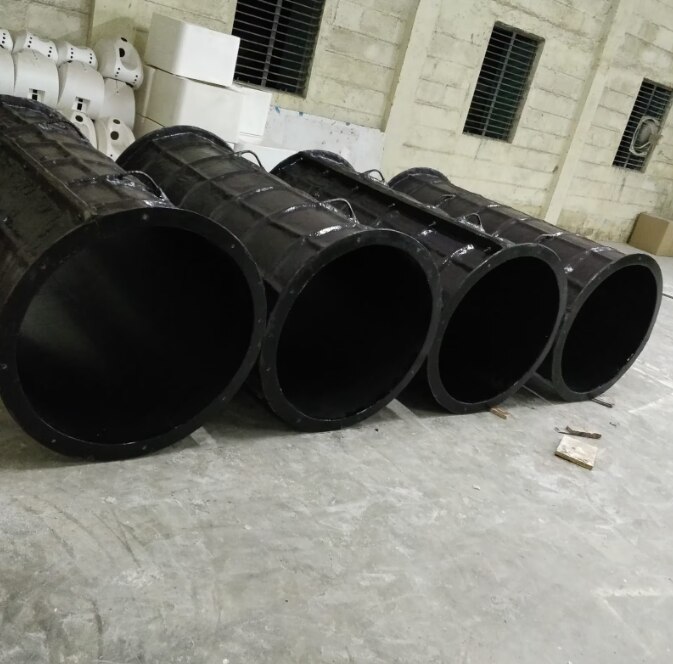
An FRP column mould is reusable formwork, not a finished decorative column, so its value depends on repetition, structural coordination and the total cost of using it on site. By the end, you can compare it with steel, plywood, timber, PVC and masonry, check whether a proposed mould fits the drawings, and calculate whether custom tooling is justified for your salon.
Key takeaways
- Choose FRP when one column profile repeats enough times to spread tooling costs.
- Confirm the mould’s internal dimensions against the finished column and reinforcement cage.
- Include joints, flanges, release access, lifting points and finish requirements in the drawing.
- Calculate cleaning, repairs, transport and labour—not just the purchase price.
When does an FRP column mould pay for itself?
A mould pays for itself when the same visible column profile is repeated enough times to spread tooling and setup costs. An FRP column mould contains fresh concrete until it gains sufficient strength; it is not the column or its reinforcement. Structural design, reinforcement, concrete specification and inspection remain essential.
| Option | Strength | Limitation |
|---|---|---|
| FRP | Light, rust-resistant, suits circular, fluted, branded and ornamental columns | Needs bracing; UV, impact and surface wear can shorten reuse |
| Steel | Strong and highly reusable | Heavier; unprotected steel rusts |
| Plywood or timber | Flexible and economical for simple one-offs | Swells, wears and needs more finishing |
| PVC | Light and smooth for limited profiles | Less adaptable for large, custom sections |
| Masonry | Useful for permanent, concealed work | Slow to alter, inspect or remove |
Test total installed cost, not the quoted mould price. Add the mould or fabrication charge, master pattern, stiffening, transport, labour, release agent, cleaning, storage, repairs, rejected castings and expected reuse count. The frp column mould cost benefits in bengaluru searches only become meaningful after this calculation, including site access and handling.
A one-off concealed column usually favours conventional shuttering; repeated, visible columns can justify tooling. Use the frp column mould for value bangalore salons human written guide principle: choose FRP when avoided per-column labour, formwork and programme costs across acceptable reuses exceed ownership cost. Ask for a stated reuse target, not “hundreds of uses.”
Will the mould fit the column, reinforcement and building drawings?
Approve an FRP column mould for commercial buildings only after the structural engineer signs the coordinated drawing. Match the mould’s internal dimensions to the finished structural column, not the nominal architectural size.
| Section | Check | Failure if missed |
|---|---|---|
| Circular | Internal diameter, out-of-roundness, taper and flute depth | Cover varies and the cage binds |
| Square | Internal width, squareness, corner radius and taper | Corners distort and finishes do not align |
| Profiled | Base, capital, flutes and architectural relief | Undercuts prevent demoulding |
Check the full mould arrangement against the drawings:
- Confirm column height, modular mould lengths, wall thickness, split lines, flange positions and external stiffening.
- Allow for concrete cover, stirrup or tie clearance, lap lengths, starter bars and the route for placing the reinforcement cage.
- Test clearance at beam and slab junctions, construction joints, MEP penetrations and service routes.
- Confirm that the mould can be opened and removed without striking the beam formwork or adjacent finishes.
A visually accurate mould still fails if the cage cannot enter, the mould cannot clear a beam, or the specified cover is lost. Check base and capital details separately; a projecting capital can block lifting or require a different split.
Request these values in writing: internal diameter or width, mould height, allowable dimensional variation, out-of-roundness or squareness, taper, wall thickness, joint alignment and flange location. Include the reinforcement cage, beam, slab, openings and construction sequence on the fabrication drawing, then obtain written sign-off from the structural engineer before production.
What should a custom FRP column mould include before production?
Before production, a custom FRP column mould needs an approved geometry, a workable casting route and measurable quality criteria. Whether the design starts as a structural drawing, elevation, physical sample or 3D model, convert it into controlled dimensions before fabrication.
1. Prepare a dimensionally accurate pattern or master. Record diameter or section, height, taper, flutes, ornamental depth, base and capital details, and surface texture. The mould reproduces this surface, including pinholes and waviness.
2. Select the mould split and demoulding direction around the finished concrete column. Closed ornaments, undercuts and deep recesses can trap the casting or stop the mould from being removed.
3. Add draft where the profile requires it. Confirm that the reinforcement cage, concrete cover and nearby beam or slab will not obstruct removal.
4. Design flanges, clamps and external stiffening for the casting pressure and handling. Provide access for the reinforcement cage, concrete feed points and vents so air cannot remain trapped in the profile.
5. Produce a prototype or first article and obtain approval before making the production mould. Check the actual cast column, not only a computer model or catalogue image.
6. Put acceptance criteria in writing for dimensions, joint lines, surface texture, gloss, pinholes, waviness, permissible patching and the finished concrete’s appearance. Request laminate-thickness records, fibre architecture, support-rib details, a stated reuse target and a repair procedure. “Hundreds of uses” is not a specification.
Confirm custom tooling availability with the supplier; never assume it is included.
How do you calculate the real ownership cost and break-even point?
Separate the ownership cost into two buckets before comparing FRP with alternatives.
One-time tooling includes:
- Mould price or fabrication charge
- Pattern or master cost
- Design revisions
- Transport to the Bengaluru site
- Lifting or handling
- Release-system trials
- Assembly, plumbing and bracing labour
Repeat-use ownership includes cleaning, storage, repairs and rejected castings. Add both buckets, then divide the total by the number of acceptable columns you expect to produce. A rejected column still consumes concrete, reinforcement, labour and programme time.
| Option | Cost basis | Repetition and programme effect |
|---|---|---|
| FRP | Tooling plus use, cleaning, repairs and handling | Stronger for identical visible columns; light mould halves reduce handling |
| Steel | Fabrication or rental, lifting, labour and rust protection | Durable, but heavier and slower to move |
| Plywood or timber | Sheets, framing, labour and replacement | Practical for one-off columns; finish and reuse decline |
| PVC | Purchase or fabrication, supports and release treatment | Useful for simple repeated profiles; check size and stiffness |
| Masonry | Blockwork, plastering, curing and removal | Suits permanent or concealed forms, not rapid repetition |
Use this break-even test: FRP is financially stronger when the avoided per-column formwork, labour and programme cost multiplied by the number of repetitions exceeds the one-time tooling and ownership cost. Count time as money. Custom setup, first-article approval, cleaning and repairs can extend the programme, while lighter halves can reduce handling effort.
Request a quotation separating tooling, mould-use, casting and replacement-part charges. Without those lines, you cannot identify the true break-even number.
What happens on site, and how should you assess a Bangalore supplier?
On site, the sequence is controlled and unforgiving:
- Check mould dimensions against the approved drawings.
- Close or assemble the sections and apply a release agent compatible with the actual gelcoat and concrete mix.
- Place, plumb and brace the mould; verify plumbing, starter bars and service routes.
- Install the reinforcement cage without losing specified concrete cover.
- Pour concrete at a controlled rate and vibrate without overloading the form.
- Cure the column, then open, clean, inspect and store the mould.
A 3 m fluid concrete head produces about 73.5 kPa at the base before placement and vibration effects. Ribs, clamps and base restraint therefore need engineering; a thin decorative shell is not enough.
For a frp column mould manufacturer bangalore search, compare evidence rather than slogans:
| Supplier evidence | What to inspect | Warning sign |
|---|---|---|
| Physical sample | Joint alignment, surface defects and finish | Only photographs |
| Laminate cutaway or thickness record | Laminate build-up and support ribs | “Hundreds of uses” without a target |
| Dimensional inspection | Diameter, height, taper and out-of-roundness | No inspection record |
| Repair terms and comparable-column references | Replacement parts and proven sizes | No repair route |
Trial the release system on the actual mould and concrete. If exposed FRP remains inside the salon, review documented fire-test evidence for the complete resin, laminate, gelcoat and finish.
A conversation with Renuka Fibre Glass should focus on drawings, sample approval, reuse assumptions, logistics and inspection records—not location or a low quotation. Choose FRP for repeated, visible, coordinated columns; choose conventional formwork when the column is one-off, concealed or simpler than the tooling.
Related product
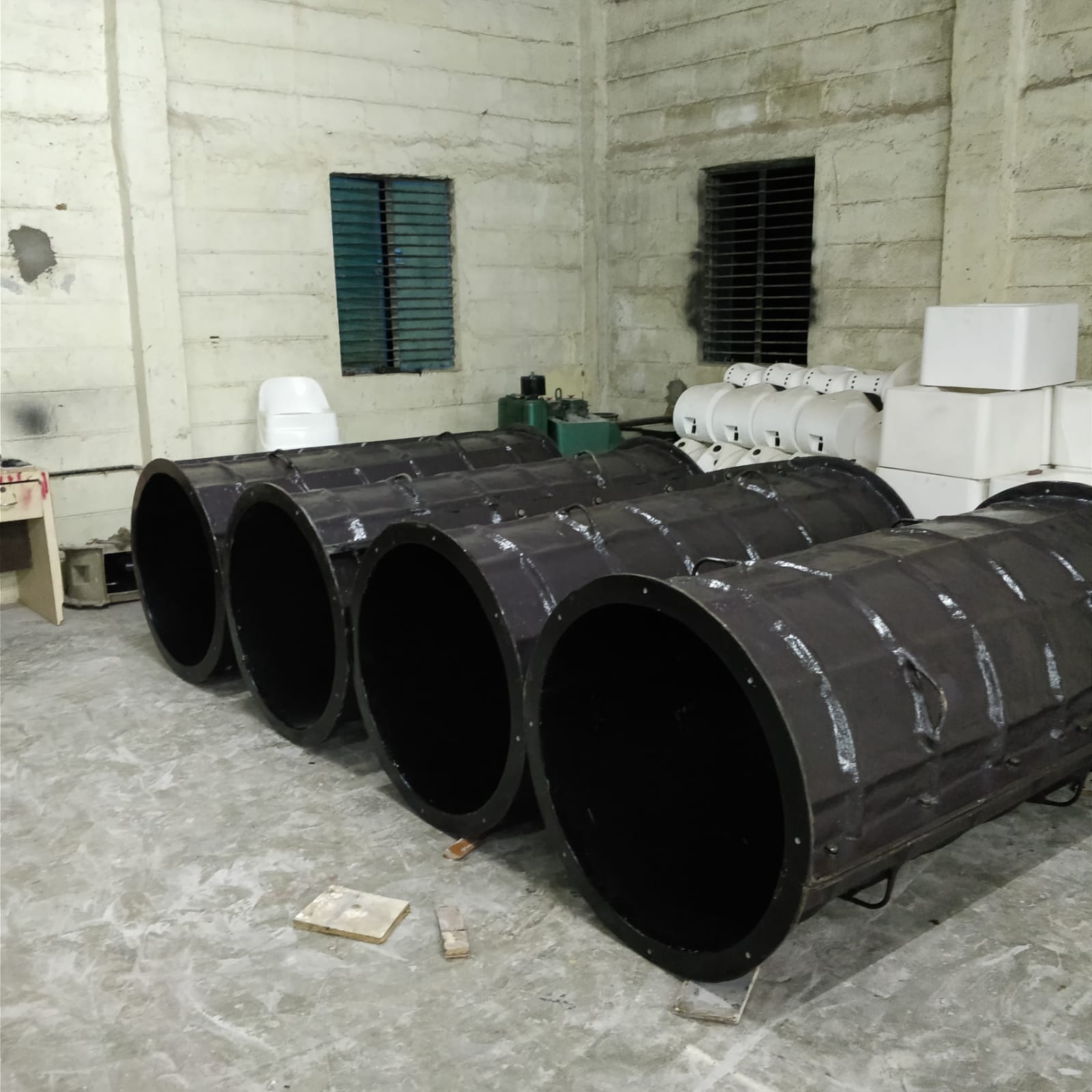 | FRP Column Mould Renuka Fibre Glass is a trusted manufacturer and supplier of high-quality FRP Column Moulds in Bangalore, Karnataka. View product → |
Frequently asked questions
When does an FRP column mould pay for itself?
It pays for itself when repeated uses reduce the per-column tooling cost below the cost of alternatives, after setup, labour, cleaning, repairs and transport.
Will an FRP column mould fit the column, reinforcement and building drawings?
Only after checking the mould’s internal dimensions, wall thickness, joints, cover, reinforcement cage, openings and finished column profile against the structural and architectural drawings.
What should a custom FRP column mould include before production?
Approve a dimensioned drawing covering the profile, tolerances, split lines, flanges, clamps, release method, lifting points, surface finish and access for placing and removing concrete.
How do you calculate the real ownership cost and break-even point?
Add purchase, design, delivery, installation, labour, cleaning, storage, repairs and disposal costs, then divide by expected usable cycles and compare the result with competing forming methods.
What happens on site, and how should you assess a Bangalore supplier?
Check delivery access, alignment, bracing, release-agent use, concrete placement, stripping instructions and repair support; ask the supplier for drawings, material details, cycle guidance and references for comparable commercial work.
Keywords