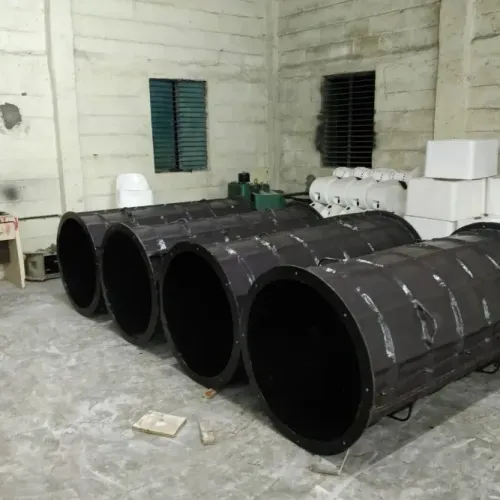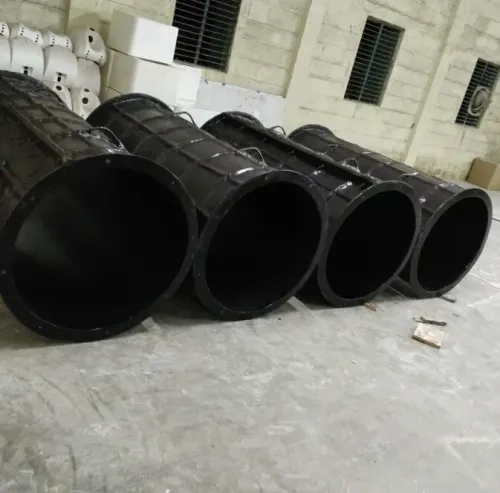
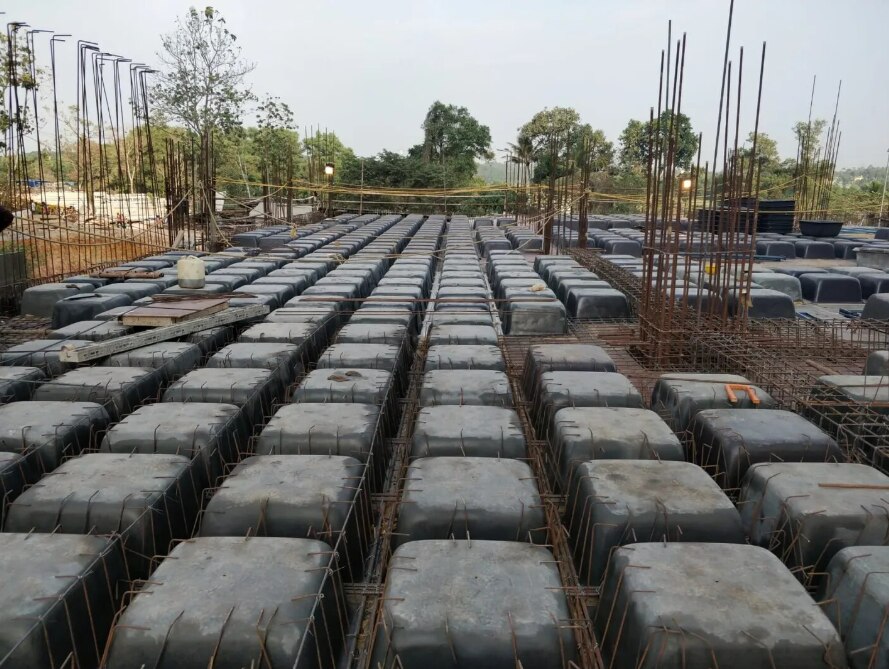
The economic case depends on completed slab cycles, not the mould’s purchase price: transport, storage, cleaning, repairs, labour and unused capacity can change the result. By the end, you will be able to test the break-even point, check whether the mould fits your structural drawings, and assess whether buying, renting or using another formwork system is the safer choice.
Key takeaways
- Divide total mould cost by completed pours to find cost per pour.
- Match mould dimensions, ribs and depth to the approved structural drawings.
- Use release agent, controlled stripping and dry covered storage to preserve reuse value.
- Confirm stock, delivery time, replacement parts and technical support before ordering.
Calculate the break-even point before you buy
A local service provider searching for frp waffle mould for slabs in bengaluru should calculate cost per completed pour, not cost per mould. Use this formula:
Total cost = purchase or rental charge + delivery and return transport + loading and unloading + storage + cleaning + repairs + damaged or idle moulds + support-system labour.
Break-even cost per cycle = total cost ÷ actual completed slab cycles.
Count only pours completed with the usable set. Ten moulds bought but used on two slabs are two cycles, not ten.
| Option | Cost pattern | Best fit |
|---|---|---|
| Timber or plywood boxes | Low initial cost, high cutting and replacement labour | One-off or irregular houses |
| Beam-and-slab formwork | Flexible, but labour-intensive and concrete-heavy | Conventional layouts |
| Steel pans | Durable and reusable, but transport and handling cost more | Repeated standard grids |
| One-off filler blocks | No mould reuse, with purchase and disposal cost | Small isolated pours |
| FRP waffle moulds | Higher setup cost, spread across completed cycles | Repeated compatible projects |
Repeated Bengaluru projects with the same grid and predictable pour sequence improve reuse, while one-off houses, irregular plans, long-distance transport and idle sets weaken the case. Lightweight handling can save labour against steel only when the moulds fit existing props, bearers and site workflow.
Buying frp waffle mould slabs for contractors does not itself reduce concrete or reinforcement. Savings come from an engineered waffle geometry approved for spans, loads and openings; rent or use a local mould pool when ownership cannot reach its break-even cycles.
Use the moulds as a planned formwork operation
A lightweight mould still sits inside a temporary-works operation. Confirm the supporting slab can carry props, bearers, moulds, reinforcement, fresh concrete, workers and equipment before installation; FRP’s low weight does not permit fewer shores or early striking.
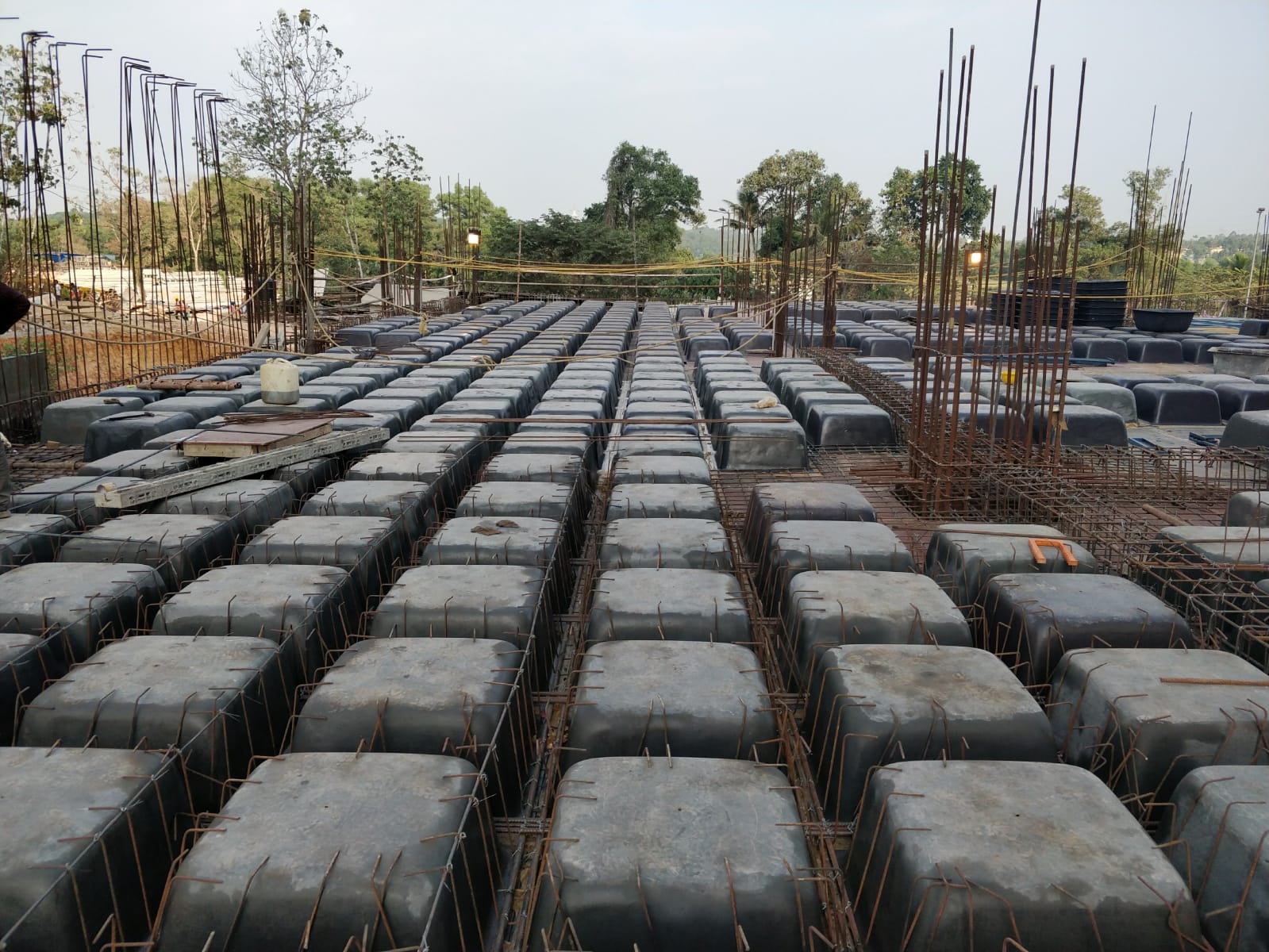
1. Set out the two-way grid from the structural drawings. Mark ribs, solid zones, beams, column heads, slab edges, stair openings, shafts and service penetrations before placing modules.
2. Position props, bearers and secondary supports on stable bases, then level and brace them. Provide working platforms; never use reinforcement, moulds or loose boards as access surfaces. Check the temporary works for the planned loads and pour sequence.
3. Place moulds on the bearers, align their ribs and secure them against movement. Use designed edge and infill pieces around beams, columns and openings. Do not cut modules casually; damaged edges leak and produce concrete bulges.
4. Install reinforcement, spacers and services without dragging bars or pipes across the moulds. Verify cover, rib steel, topping steel and every penetration against the approved drawings before closing the work area.
5. Place concrete in the engineer’s approved sequence, keeping hoses, workers and vibrators from dislodging modules. Vibrate enough to fill ribs and topping, but excessive vibration causes leakage, movement and loss of alignment. Cure to the specified method and duration.
6. Strip only after the specified concrete strength and approved striking sequence are reached. Remove supports as planned, release moulds without levering against the laminate, then clean, count and inspect every unit before stacking it on level supports for the next complete cycle.
Match the mould geometry to the structural drawings
The mould geometry must match the approved structural drawings before you place an order. Get the structural designer’s approval for rib width and depth, centre-to-centre spacing, void-module length and width, flange or topping thickness, overall slab depth, column heads, solid zones, reinforcement layout, punching shear, rib shear, deflection, fire performance, vibration and openings.
Use this purchase checklist:
- External and internal dimensions
- Dimensional tolerances, corner radius, wall thickness and release-surface finish
- Unit weight, lifting points, maximum handling or stacking load and permissible stacking height
- Compatibility with the selected props, bearers and stripping method
A reusable FRP mould is temporary formwork unless the supplier and engineer expressly approve it as a permanent void-forming system. The mould drawing is not a slab design.
| Module choice | Site consequence | Business consequence |
|---|---|---|
| Correct approved geometry | Units align with ribs, edges and solid zones | Predictable placement and reuse |
| Wrong length, width or spacing | Forced infill pieces, site cutting, cumulative gaps and concrete bulges | Laminate damage and lost labour savings |
| Wrong depth or corner detail | Uneven topping, leakage or misaligned reinforcement | Rework and delayed stripping |
Trial-fit several units on a level template before the first pour. Check the assembled rib lines, cumulative gaps, edge fit, column-head transitions and opening details; one mould can meet its drawing while the assembled grid still fails. Get written confirmation that the proposed units suit the props, bearers and approved stripping sequence.
Protect reuse value through release, stripping and storage
Do not buy on a promised cycle count. Reuse depends on the resin system, release-agent choice, stripping method, cleaning, ultraviolet exposure, heat, impact and stacking; a mould that survives one contractor’s workflow can fail early in another’s.
1. Obtain the supplier’s recommended release agent for the specified laminate. Apply a compatible, thin film to a clean, dry surface before each pour. Do not use diesel, incompatible solvents or improvised chemicals that attack the release surface.
2. Remove cement slurry before it hardens, using only cleaning methods approved for the laminate. Never drag a mould across reinforcement or lever it out with steel bars; those actions chip edges, crack laminates and distort dimensions.
3. Accept cosmetic surface marks only when the mould has no cracks, delamination, exposed fibres, warped edges or changed dimensions. Damaged or warped moulds create misaligned ribs, leakage, chipped concrete corners and uneven finishes.
4. After stripping, inspect each unit, clean it, and record damage before the next cycle. Stop reusing any mould that no longer sits flat or matches the approved geometry.
5. Store units in Bengaluru on level supports that spread the load rather than create point pressure. Keep them dry, covered and away from direct sun and local hot work; stack them without crushing lower moulds.
Good handling preserves reuse value, but it cannot convert an unsuitable resin system or damaged laminate into a long-life mould.
Verify Bengaluru stock, support and delivery before committing
A quoted lead time is not proof that the complete mould set will reach your site before the pour. Treat waffle slab mould availability in bengaluru as a programme and complete-set check, not a web-listing check.
1. Ask a frp waffle mould supplier in bengaluru to confirm the exact module, length, width, depth, rib width, centre spacing, undamaged unit count, edge and infill pieces, accessories, resin system, release-agent instructions, stacking limits, stripping method and replacement process.
2. Confirm physical stock, dispatch and delivery dates, truck capacity, loading volume, site demonstration and return logistics. Partial delivery can leave an entire pour front unusable, even when manufacturing has finished.
3. On arrival, photograph and record the unit count, external dimensions, flatness, rib geometry, cracks, delamination, exposed fibres, damaged corners and release-surface condition. Trial-fit several units on a level template; cumulative gaps and misalignment can appear only after assembly.
4. Compare delivered purchase cost with rental or a local mould pool, including transport, loading, storage, cleaning, repairs, unused units and return freight. Renting wins when Bengaluru work is intermittent, floor grids vary or storage is limited; ownership suits repeated compatible pours.
Renuka Fibre Glass is one Bengaluru-based supplier to contact for exact geometry and availability, but validate drawings, stock and site support before treating the name as evidence of suitability. A supplier who cannot demonstrate the set, delivery route and replacement process cannot protect your programme.
Related product
 | FRP Waffle Mould Slab Renuka Fibre Glass is a trusted manufacturer and supplier of high-quality FRP Waffle Slab Moulds in Bangalore, Karnataka. View product → |
Frequently asked questions
How do you calculate the break-even point for FRP waffle mould slabs?
Divide the total purchase and setup cost by the number of completed pours. Compare that cost per pour with the rental or alternative formwork cost.
How should contractors use FRP waffle moulds as a formwork operation?
Plan mould placement, reinforcement access, concrete placement, stripping time and movement to the next pour before the first installation.
How do you match an FRP waffle mould to structural drawings?
Check mould length, width, depth, rib spacing, edge conditions and slab thickness against the approved drawings before purchase.
How can you protect the reuse value of FRP waffle moulds?
Apply a compatible release agent, strip without levering against edges, clean concrete residue promptly and store moulds dry, covered and supported.
What should you verify before buying from an FRP waffle mould supplier in Bengaluru?
Confirm physical stock, mould dimensions, dispatch timing, delivery coverage, replacement availability, handling guidance and technical support.
Keywords