A factory waste area fails when bins are placed by convenience, sized by guesswork, or used for materials they cannot safely contain. You will be able to map each waste stream, specify the bin’s dimensions and materials, identify where FRP is unsuitable, and compare suppliers on delivered cost and serviceability.
Key takeaways
- Map every waste point before ordering bins.
- Size capacity by daily volume, access and collection frequency.
- Separate incompatible, hazardous and general waste streams.
- Check fire performance, chemical compatibility and delivered support.
Map every waste area before choosing a bin
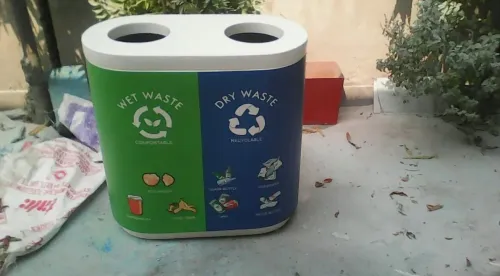
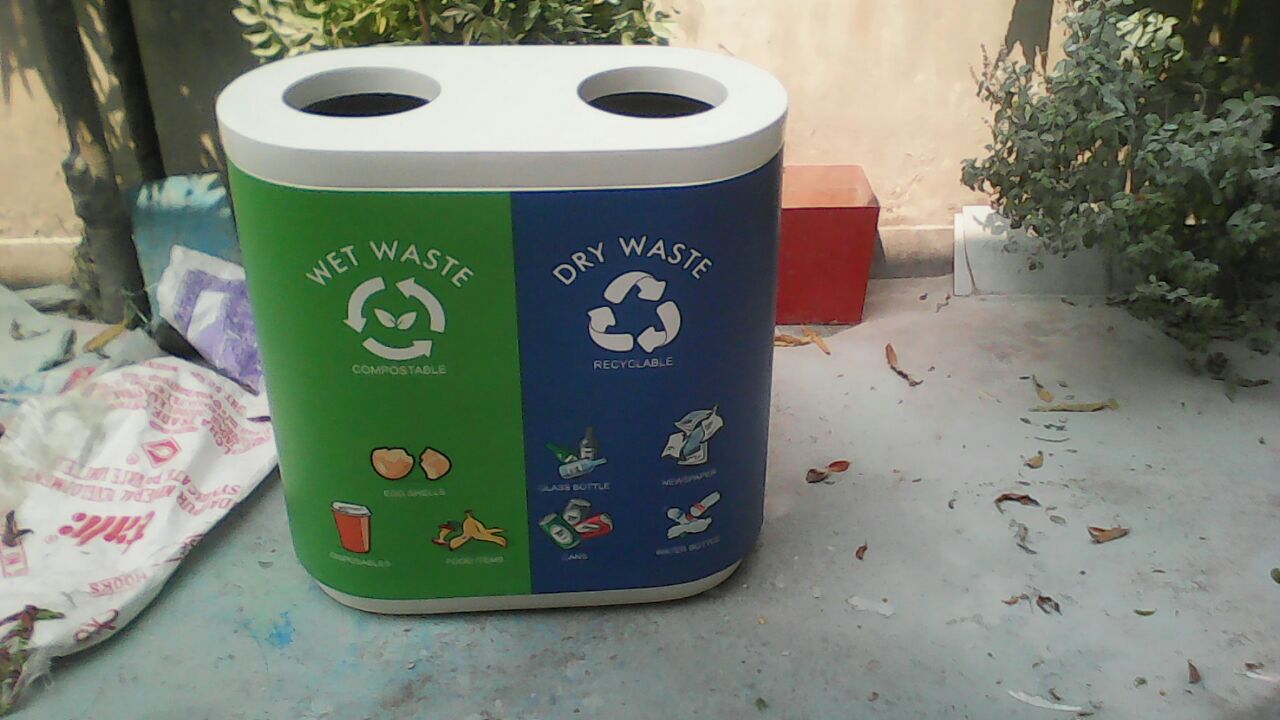
Draw a facility map before ordering bins. Mark each production line, maintenance bay, loading dock, canteen, office, chemical store and outdoor yard, then record the waste generated, its contamination risk, collection route and nearest safe holding point. One mixed-waste FRP bin is unsuitable where your EHS procedure requires segregation.
| Area | Keep separate | Placement rule |
|---|---|---|
| Production lines | General refuse, recyclable packaging, metal offcuts, oily cotton waste | Place labelled bins at the point of generation without narrowing walkways or blocking emergency equipment. |
| Maintenance bays | Metal scrap, used absorbents, oily rags and chemical-contaminated material | Keep covered containers beside the work zone; isolate incompatible or regulated waste. |
| Loading docks | Cardboard, plastic wrapping, pallets and damaged goods | Position bins along the receiving route, away from forklift turning paths. |
| Canteens | Food waste and dry recyclable packaging | Use lidded bins near washing and collection points; prevent access by pests. |
| Offices | Paper, dry recyclables and residual refuse | Keep small segregated bins near printers, workstations and cleaning routes. |
| Chemical stores | Empty containers, spill absorbents and chemical residues | Use the approved hazardous-waste containers and keep them within the store’s controlled area. |
| Outdoor yards | Yard sweepings, scrap and weather-exposed packaging | Choose covered locations on a washable, non-draining surface. |
Use the facility’s approved colour code and labels, including the waste name and hazard warning. Check the Solid Waste Management Rules, 2016 and Hazardous and Other Wastes Rules, 2016 where they apply. Make the collection route one-way where possible; otherwise bins become obstacles and segregation fails.
Size the bin around waste volume, access and collection frequency
Start with the waste generated between collections, then add headroom rather than choosing by litre rating alone. A bin that fills before pickup creates overflow and unsafe handling; an oversized bin wastes floor space and obstructs movement. Check the opening as carefully as capacity, because a narrow mouth can make a large body unusable.
Put these details on the procurement drawing:
- Overall height and footprint, including caster projection
- Clear opening dimensions and rim height
- Wall thickness, empty weight and maximum working load
- Liner size and removal method
- Lid type and required clearance for opening
- Handle locations, lifting points and emptying route
- Drain plug where liquid contamination is possible
- Stacking or nesting arrangement if storage space is limited
- Combined gross load for the body, waste and liner
- Wheel diameter, wheel material, swivel and brake arrangement
- Floor condition and exposure to oil, coolant or chemicals
A nominally high-capacity FRP body does not prove that its caster plate or fasteners can carry the loaded bin. Test the route through doorways, aisles and forklift crossings before fixing dimensions.
Custom FRP waste bins become economical after the opening, capacity, lid, colour, mounting and quantity are stable. For a small order, a standard body with customised labels, liners, caster sets or brackets can reduce tooling cost, shorten lead time and make replacement easier.
Match the bin material to the waste and the hazard
FRP is appropriate for general dry waste, recyclable packaging and damp production-floor refuse where low weight, corrosion resistance and easy washing matter. Specify the resin, glass-fibre construction and gelcoat against the actual contaminants; “chemical resistant” alone proves nothing.
Keep oily cotton, metal offcuts, food waste and chemical-contaminated material in separately identified containers under your EHS procedure.
| Material | Choose it when | Main limitation |
|---|---|---|
| FRP | You need a lightweight, non-rusting bin for dry or mildly corrosive waste, washdown areas or a custom shape. | Resin, liner and caster design determine chemical and impact performance. |
| HDPE | You need an economical, impact-resistant bin for wet waste, food waste or routine outdoor use. | Solvents, high heat and sharp metal can soften, crack or puncture it. |
| Galvanised steel | Waste includes hot work debris, sharp scrap or rough handling that could damage plastics. | Acid, salt, persistent moisture and chemical residue attack the zinc coating and exposed steel. |
| Stainless steel | Hygiene, frequent washing and corrosion resistance take priority in food or clean-process areas. | Purchase cost, weight and dent repair are higher. |
| Masonry waste station | You need a fixed outdoor collection point for bulk, non-hazardous waste and vehicle-accessible servicing. | It cannot move with production changes and needs sound drainage and civil construction. |
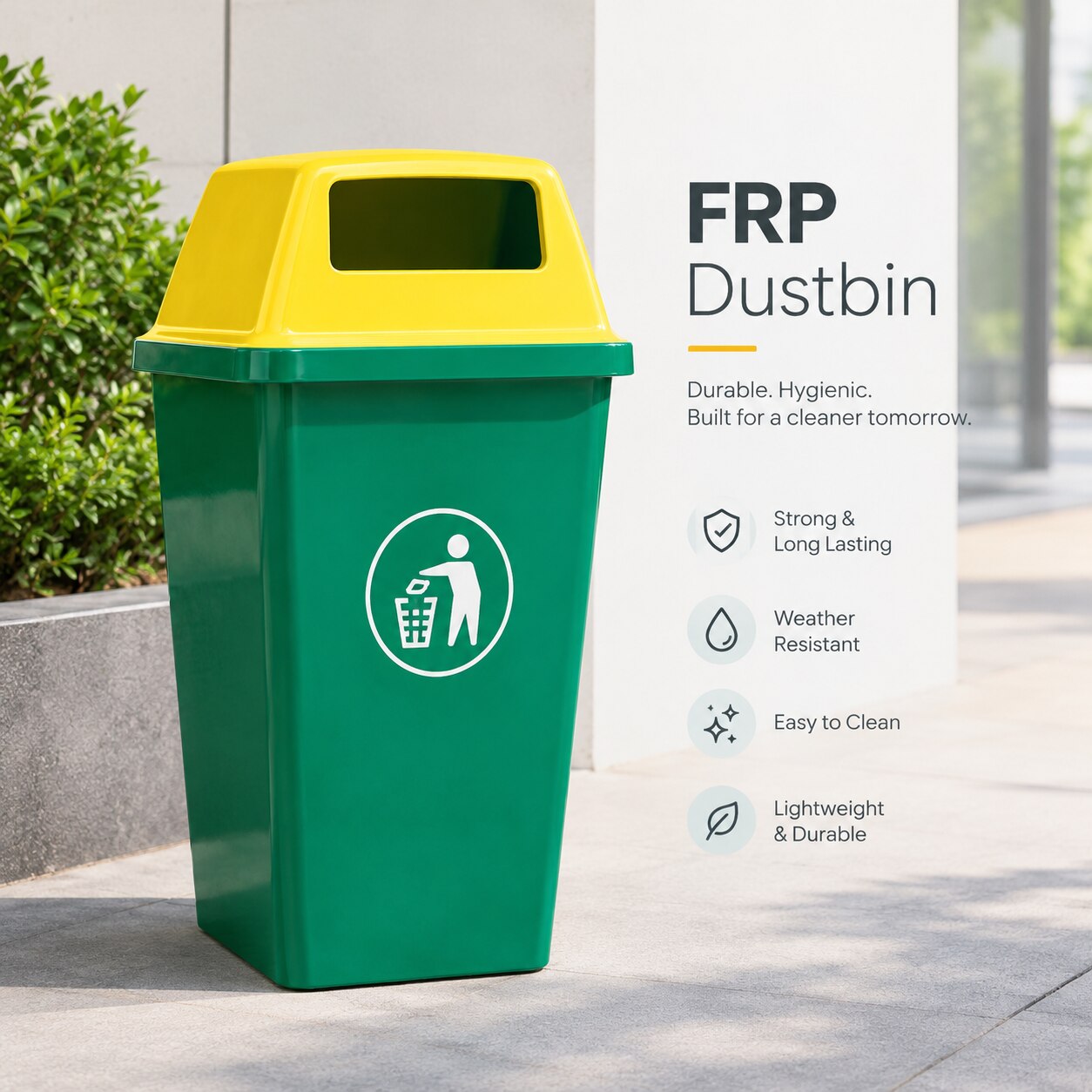
For chemical streams, obtain a compatibility statement naming the resin, concentration and temperature range. An FRP dustbin manufacturer for manufacturing facilities should also state the combined bin-and-waste load, wheel diameter, caster brake and floor limits; a strong body with undersized casters still fails.
Specify fire safety, chemical compatibility and acceptance checks
Do not approve an FRP bin from the words “chemical resistant” or “fire retardant.” Require evidence for the exact resin, glass-fibre construction, gelcoat, liner and lid being supplied. FRP is combustible unless a documented fire-performance result and your EHS approval establish otherwise.
1. Request the material specification, drawing, resin and gelcoat names, fibre form, laminate thickness, manufacturing process, stated tolerances, warranty exclusions and a sample approval record.
2. List every contaminant the bin will hold: oils, solvents, acids, alkalis, metalworking fluids and cleaning chemicals. Obtain a compatibility statement for each chemical at its concentration, temperature and contact time; specify a barrier coat or removable liner where the resin is unsuitable.
3. Ask for fire-test evidence tied to the required failure mode, including the test method, specimen construction, result and report laboratory. ASTM D2584 ignition loss only estimates cured resin and reinforcement content; it does not prove fire safety, impact resistance or chemical compatibility.
4. At delivery, inspect the laminate for cracks, exposed fibres, blisters, pinholes, sharp edges, resin-starved areas and delamination. Check that the gelcoat is continuous and that joints, drain plugs, handles, wheels, lid and liner fit match the approved drawing.
5. Fill the bin with its intended waste and check stability, lid operation, access clearance and leak-tightness. Reject it if liquid collects in unsealed seams, deep internal ribs or damaged surfaces that cannot be washed clean.
Record the serial or batch reference, inspection date, deviations and corrective action before releasing the bin to production. Keep colour, label and waste-stream identification consistent with the site EHS procedure and applicable Indian waste rules.
Compare an industrial supplier on delivered cost and support
A low unit price is not the delivered cost. For an FRP dustbin manufacturer in Bengaluru, compare body price with freight, unloading, GST, caster specification, liner supply and replacement lead time. Ask every industrial FRP dustbin supplier for the same drawing and acceptance criteria, especially when a mould, lid, bracket or mounting pattern is customised.
| Option | Delivered-cost test | Support test |
|---|---|---|
| Standard local model | Compare body, freight, unloading and GST against the landed price for the required quantity | Confirm replacement casters, liners, lids and colour-matched units remain available |
| Custom model | Add plug or mould charges, sample approval, minimum order quantity and tooling lead time | Require a reproducible drawing, material specification, tolerances and a stated repair method |
| Lowest unit-price quote | Check whether non-standard wheels, thin sections or unavailable spares create later downtime | Reject it if warranty exclusions, replenishment lead time or site support are unclear |
Use a written purchase schedule. It should state capacity, overall height, footprint, opening, lid, liner, caster load, resin system, gelcoat, UV requirement for outdoor yards, production lead time and inspection points. Request a sample before approving a batch; inspect laminate continuity, sharp edges, wheel mounting and lid fit.
A supplier such as Renuka Fibre Glass should answer those same technical and after-sales questions, not receive approval on reputation alone. If you plan to buy FRP dustbins in Karnataka, include one replacement-unit price and one emergency-delivery time in the comparison.
Related product
 | FRP Dustbin Renuka Fibre Glass is a reliable manufacturer and supplier of premium-quality FRP Dustbins in Bangalore, Karnataka. View product → |
Frequently asked questions
How do you map waste areas before choosing FRP bins?
Mark production lines, maintenance bays, loading docks, canteens, offices, chemical stores and outdoor yards. Record each waste stream, contamination risk, collection route and safe holding point.
How should you size an industrial waste bin?
Base capacity on waste volume between collections, available access space and the handling route. A larger bin is not suitable if workers cannot move or empty it safely.
Is FRP suitable for every manufacturing waste stream?
Match the resin, liner and construction to the waste. Check compatibility with oils, solvents, acids, alkalis, moisture and contaminated materials before specifying an FRP bin.
What should you verify with an industrial FRP dustbin supplier?
Request the bin dimensions, capacity, material and resin details, colour or segregation options, lid and wheel specifications, fire-safety information, chemical-compatibility evidence and acceptance criteria.
Keywords